
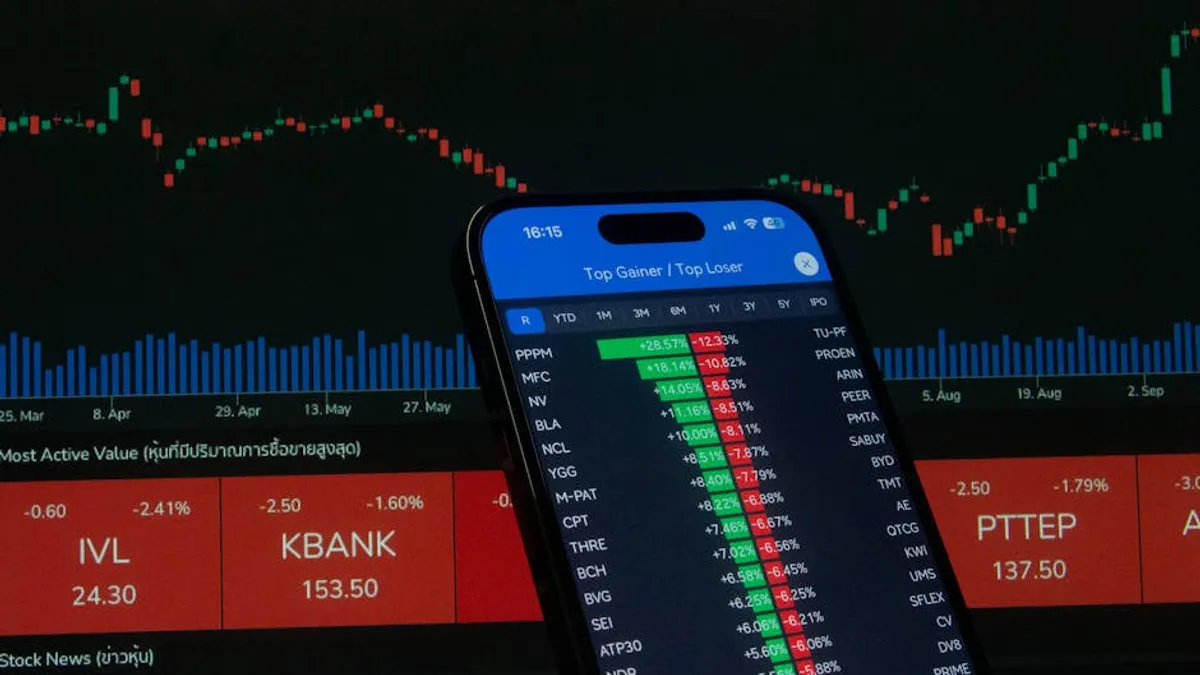
Understanding the fundamental differences between trading and gambling is critical for anyone engaging in financial markets or considering speculative activities. While both involve risk and the potential for financial gain or loss, their underlying mechanics, decision-making processes, and long-term viability diverge significantly. Recognizing these distinctions is not merely semantic; it dictates the approach to capital allocation, risk management strategies, and the potential for consistent profitability versus intermittent luck. Understanding the probability in betting and trading can help you manage risk more effectively.
Basis of Decision-Making
The core distinction lies in the methodology used to make decisions and allocate capital. Trading, in its professional form, relies on systematic analysis and informed projections, whereas gambling primarily operates on chance and probability.
Research and Data-Driven Analysis
Professional trading involves extensive research and data analysis. Traders employ various methods to evaluate assets, market conditions, and potential future movements. This includes fundamental analysis, which assesses a company's financial health, industry trends, and economic indicators, and technical analysis, which studies price charts and volume data to identify patterns and predict future price action. Decisions are often based on probabilities derived from historical data, statistical models, and an understanding of market psychology. The goal is to identify situations where the odds are skewed in the trader's favor, based on verifiable information and repeatable strategies.
Best for: Individuals who commit to continuous learning, data interpretation, and strategic planning.
Probability and Randomness
Gambling, by contrast, centers on events with predetermined, often fixed, odds where the outcome is largely random or influenced by factors beyond the participant's control. While some forms of gambling, like poker, involve skill, the foundational element for most casino games or lotteries is pure chance. The house edge ensures long-term profitability for the operator, meaning that over time, participants are statistically likely to lose. Decisions are often driven by intuition, superstition, or the thrill of a large, improbable payout, rather than systematic analysis of underlying value or market dynamics.
Best for: Entertainment purposes, where financial loss is accepted as the cost of leisure.
Risk Management and Control
Effective risk management is paramount in both activities, but the degree of control and the tools available differ substantially, directly impacting long-term financial outcomes.
Stop-Losses and Position Sizing
In trading, risk management is an active, integral component of every decision. Traders utilize tools like stop-loss orders to limit potential losses on a position, ensuring that if a trade moves against their prediction, the downside is capped. Position sizing, the practice of determining how much capital to allocate to a single trade, is another critical element. This ensures that no single loss can disproportionately impact the overall portfolio. Professional traders often risk only a small percentage (e.g., 1-2%) of their total capital on any given trade, preserving capital for future opportunities and mitigating the impact of inevitable losing trades. This systematic approach aims to ensure survival and growth over a series of trades, not just individual wins.
- Defined entry and exit points for every trade.
- Proportional capital allocation based on risk tolerance.
- Continuous monitoring of market conditions and open positions.
- Use of hedging strategies to offset potential losses.
Fixed Odds and Payouts
Gambling typically involves fixed odds and predefined payouts. Once a bet is placed, the participant generally has no further control over the outcome or the amount risked, beyond the initial stake. While some games offer options to increase or decrease stakes, the underlying probability of winning remains constant and often unfavorable to the player over time. There are no "stop-losses" in the traditional sense; the entire stake is at risk until the outcome is determined. The focus is often on the immediate, all-or-nothing outcome of a single event rather than managing a portfolio of ongoing risks.
Pro Tip: A critical differentiator is the ability to adjust your exposure after an initial commitment. If you can set a stop-loss or scale out of a position based on new information, you are engaging in a form of trading. If your entire stake is locked until a random outcome, it aligns more closely with gambling.
Time Horizon and Strategy
The temporal focus and strategic goals also delineate trading from gambling, impacting the nature of returns and the psychological approach required.
Compounding Returns and Long-Term Growth
Trading strategies often operate with a medium to long-term perspective, even for day traders who execute many transactions within a single session. The overarching goal is consistent, incremental gains that compound over time. Traders aim for a positive expectancy – a statistical edge where the average winning trade outweighs the average losing trade, multiplied by the frequency of wins. This requires patience, discipline, and an understanding that not every trade will be profitable, but the overall strategy should yield positive results over many iterations. The focus is on capital preservation and gradual wealth accumulation.
Immediate Outcomes and Entertainment
Gambling, conversely, is typically characterized by a short-term time horizon. The thrill often comes from the immediate resolution of a bet and the quick potential for a large payout. The primary objective is often entertainment or the pursuit of a significant, immediate win, rather than a systematic approach to wealth building. The inherent randomness means that while large wins can occur, they are unpredictable and do not necessarily reflect skill or a repeatable strategy.
Skill vs. Luck
While both activities can contain elements of skill and luck, their proportional influence varies dramatically.
Market Analysis and Learning
Trading is fundamentally a skill-based endeavor. Success is correlated with a trader's ability to analyze markets, understand economic forces, interpret data, manage risk, and control emotions. It requires continuous learning, adaptation to changing market conditions, and refinement of strategies. While luck can play a role in individual trades, consistent profitability over time is a direct result of developed expertise and disciplined execution. Traders invest in education, tools, and practice to hone their abilities.
Inherent Randomness and Entertainment Value
Gambling relies heavily on luck. While some games may involve strategic elements (e.g., card counting in blackjack, though often countered by casinos), the underlying mechanics of most gambling activities are designed to be random, ensuring the house maintains an edge. The appeal is often the entertainment value and the slim chance of a life-changing win, which is distinct from the deliberate pursuit of a statistical edge through skill and analysis.
Regulatory Framework
The regulatory environments for trading and gambling reflect their distinct characteristics and objectives.
Financial trading markets (stocks, bonds, commodities, forex) are typically regulated by government bodies (e.g., SEC, FCA, BaFin) designed to ensure transparency, fairness, and investor protection. These regulations mandate disclosure requirements, prevent market manipulation, and license brokers and exchanges. The focus is on maintaining orderly markets and protecting participants from fraud or unfair practices, recognizing trading as a legitimate financial activity.
Gambling, on the other hand, is regulated by gaming commissions or similar bodies, which focus on preventing addiction, ensuring fair play (within the context of random outcomes and house edge), and collecting taxes. Regulations often limit advertising, restrict access based on age, and monitor for illicit activities. The legal framework acknowledges gambling primarily as an entertainment industry with inherent risks to consumers, requiring specific oversight to manage social impacts.
Informing Your Approach to Financial Activities
Understanding whether an activity leans towards trading or gambling is crucial for setting realistic expectations and adopting appropriate financial behaviors. If your objective is wealth accumulation through calculated risk, a trading approach—characterized by research, systematic risk management, and continuous skill development—is essential. This involves treating financial markets as a domain for analytical decision-making, where consistent effort and discipline aim to generate a positive expectancy over time. Conversely, if an activity's primary draw is immediate gratification, entertainment, or the hope of a large, random payout, acknowledging it as a form of gambling allows for a more responsible approach, where any capital risked should be considered an entertainment expense, not an investment.
Frequently Asked Questions
Can trading ever be considered gambling?
Yes, if trading decisions are made without proper research, risk management, or a defined strategy, relying instead on speculation, emotion, or "hunches," it can essentially become a form of gambling. The distinction lies in the methodology, not just the activity itself.
Is it possible to be consistently profitable in gambling?
For most forms of gambling with a house edge (e.g., casino games, lotteries), consistent profitability over the long term is statistically improbable for the player. While short-term wins are possible, the mathematical advantage lies with the operator.
What is the most important factor distinguishing trading from gambling?
The most important factor is the basis of decision-making. Trading is driven by analysis, data, and a systematic approach to risk management, while gambling is primarily driven by chance, fixed odds, and an acceptance of random outcomes.
How does regulation impact the perception of trading versus gambling?
Regulatory frameworks differentiate the two by imposing distinct rules, oversight bodies, and consumer protections. Financial market regulations emphasize transparency, fairness, and investor protection, reflecting trading's role in capital formation. Gambling regulations focus on consumer protection from addiction and ensuring fair play within a random framework, acknowledging its entertainment nature.