
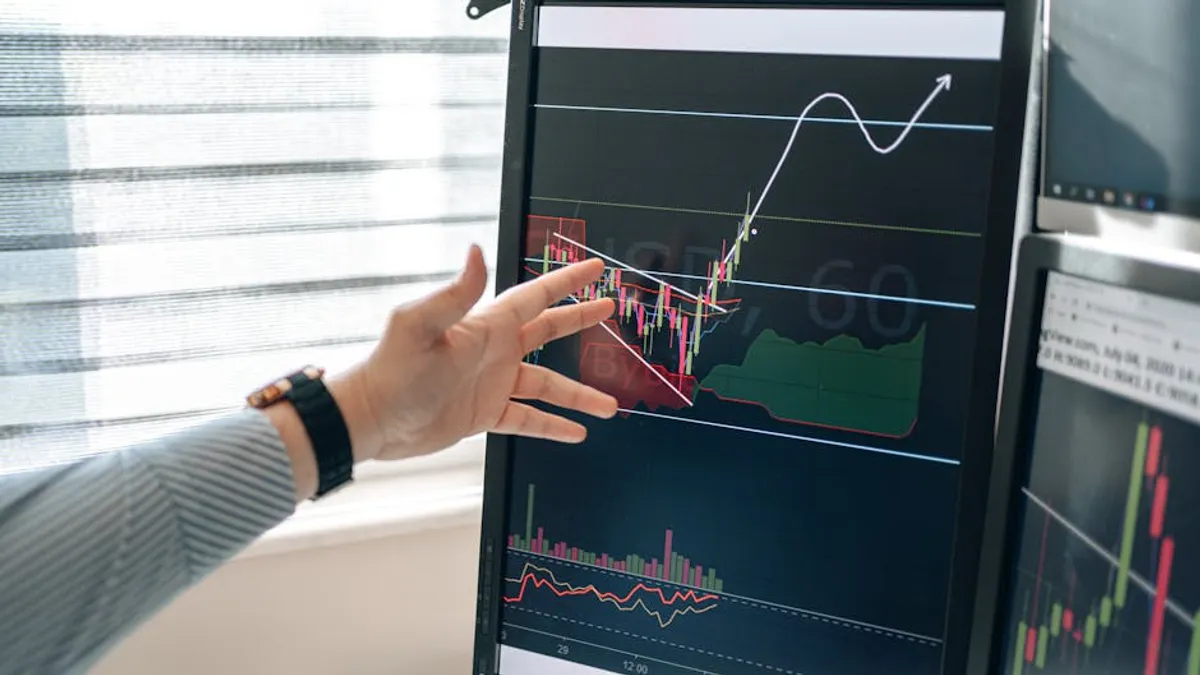
Understanding the interplay between stock trading news and market movements is fundamental for anyone seeking to navigate financial markets, whether as an active trader or a content creator in the finance sector. News acts as a primary catalyst, shaping investor sentiment and directly influencing asset prices. Discerning which news events hold genuine market-moving potential, how quickly that information is assimilated, and its subsequent impact on trading decisions separates informed participants from those reacting impulsively. This foundational knowledge is essential for developing robust trading strategies, crafting relevant financial commentary, and anticipating market shifts.
The Core Link: News, Sentiment, and Price Action
Market movements are rarely arbitrary; they are often direct responses to new information. This information, broadly categorized as "news," can range from company-specific announcements to global economic shifts. The market's reaction is not just about the raw data, but how that data is interpreted by a collective of millions of participants, forming a dominant sentiment that drives buying or selling pressure, ultimately dictating price action.
Categorizing Market-Moving News
Not all news carries equal weight. Effective analysis requires distinguishing between background noise and high-impact information. Key categories include:
- Company-Specific News: Earnings reports, dividend announcements, product launches, mergers & acquisitions (M&A), leadership changes, and regulatory approvals or setbacks. These directly affect a company's perceived value and future prospects.
- Economic Data Releases: Gross Domestic Product (GDP) reports, inflation figures (CPI, PPI), employment statistics (non-farm payrolls, unemployment rates), retail sales, and manufacturing indices. These indicators provide insights into the overall health and direction of the economy, influencing sectors and the broader market.
- Central Bank Announcements: Interest rate decisions, quantitative easing/tightening policies, and forward guidance from institutions like the Federal Reserve or European Central Bank. These directly impact borrowing costs, capital flows, and investor confidence.
- Geopolitical Events: Elections, trade agreements, international conflicts, and significant policy shifts by major governments. Such events introduce uncertainty or create new opportunities, affecting global markets.
- Commodity Price Swings: Significant changes in oil, gold, or other commodity prices can impact industries reliant on these resources, influencing their stock performance.
The Role of Investor Psychology
News doesn't simply trigger a logical, algorithmic response. Human psychology plays a critical role in translating news into market movement. Positive news can ignite optimism and greed, leading to rapid buying and price increases, often beyond what fundamental analysis might suggest. Conversely, negative news can trigger fear and panic, prompting sell-offs. This emotional component often leads to overreactions in the short term, creating volatility and potential opportunities for those who can maintain a disciplined, objective perspective.
Dissecting News Impact: From Release to Reaction
The speed and magnitude of a market's reaction to news are crucial considerations. Modern financial markets are highly efficient, meaning information is disseminated and processed almost instantaneously. However, the full implications of complex news events can unfold over time.
Understanding Market Efficiency and Information Dissemination
In theory, efficient markets immediately price in all available public information. This suggests that by the time news is widely reported, its impact might already be reflected in stock prices. However, "efficient" does not mean "perfect." Information asymmetry still exists, and not all participants interpret news identically or have the same access speed. Flash crashes or rallies often occur when unexpected news hits, creating a rapid re-evaluation of assets. The initial reaction is typically driven by algorithmic trading and high-frequency traders, followed by institutional and retail investors as they process the information.
Identifying Key News Sources
Reliable and timely news sources are paramount. Relying on unverified information or delayed reports can lead to poor decisions. Primary sources include:
- Official Company Filings: SEC filings (10-K, 10-Q, 8-K), investor relations portals.
- Reputable Financial News Outlets: Major wire services, financial newspapers, and established business news channels.
- Government Agencies: Bureau of Labor Statistics, Federal Reserve, Department of Commerce for economic data.
- Central Bank Websites: For monetary policy announcements and minutes.
Pro Tip: Focus on the unexpected element of news. If an earnings report meets analyst expectations, the market reaction might be muted, as that outcome was largely "priced in." Significant deviations from expectations, positive or negative, are what typically trigger substantial price movements.
Practical Application: Integrating News into Trading Decisions
Successfully integrating news into a trading framework requires more than just reading headlines; it demands analysis, context, and a disciplined approach to execution.
Event-Driven Trading Strategies
Event-driven trading involves making decisions based on specific corporate or economic events. This can include:
- Earnings Plays: Anticipating or reacting to quarterly earnings reports, often involving options strategies to capitalize on implied volatility.
- Merger Arbitrage: Profiting from the price difference between a target company's stock and the acquiring company's offer during an M&A deal.
- Macroeconomic Plays: Positioning portfolios based on expected interest rate changes or shifts in economic growth forecasts.
Best for: Traders with strong fundamental research skills and an ability to act quickly on new information.
Avoiding Common Pitfalls
Emotional trading is a significant risk when reacting to news. Common pitfalls include chasing momentum without understanding underlying fundamentals, over-leveraging based on a single news item, or failing to verify information. A structured approach, including pre-defined entry and exit points and risk management protocols, is crucial to mitigate these risks. It's also important to recognize that market reactions can be counter-intuitive; "buy the rumor, sell the news" is a common adage reflecting how expectations often precede the actual event.
Beyond Headlines: The Nuances of Market Movement
While news is a powerful driver, market movements are also shaped by other factors that interact with information flow.
Technical Analysis as a Complement
Technical analysis, the study of price charts and patterns, can complement fundamental news analysis. While news provides the "why" behind a move, technicals can help identify optimal entry and exit points, support/resistance levels, and the strength of a trend. For example, a strong earnings report (news) might confirm an upward trend identified by technical indicators, providing a more robust trading signal.
The Influence of Macroeconomic Factors
Broader macroeconomic conditions, such as global liquidity, inflation trends, and geopolitical stability, create the overarching environment in which news is received. A positive company earnings report might have a muted effect during a period of high inflation and rising interest rates, as the broader economic headwinds overshadow company-specific good news. Understanding these larger forces provides essential context for interpreting the impact of individual news items.
Building a News-Informed Trading Perspective
Developing a sophisticated understanding of how stock trading news influences market movements is an ongoing process. It requires continuous learning, critical evaluation of information, and the discipline to separate impactful data from market noise. By categorizing news, understanding its psychological impact, and integrating it with broader market analysis, individuals can build a more informed and strategic approach to financial markets, enhancing their ability to make judicious decisions and anticipate trends.
Frequently Asked Questions
What types of news typically cause the largest stock market movements?
Unexpected news, particularly concerning economic indicators (like inflation or employment), central bank policy changes, and major corporate earnings surprises, tends to generate the most significant and immediate market reactions. Geopolitical events also have the potential for widespread impact.
How quickly does news impact stock prices?
In modern, highly efficient markets, news can impact stock prices almost instantaneously, often within seconds or minutes of its release. High-frequency trading algorithms are designed to process and react to new information faster than human traders, leading to rapid initial price adjustments.
Can individual investors profit from trading on news?
Yes, but it requires speed, accurate interpretation, and a well-defined strategy. The challenge for individual investors is competing with institutional traders and algorithms that have superior access to information and execution speed. Focusing on the longer-term implications of news, rather than just the immediate reaction, can be a more viable approach.
What is the difference between "expected" and "unexpected" news in trading?
Expected news refers to information that has largely been anticipated by the market, such as an earnings report that falls within analyst consensus estimates. Unexpected news, conversely, is information that significantly deviates from market expectations, leading to a much stronger and often more volatile price reaction as traders re-evaluate asset values.