
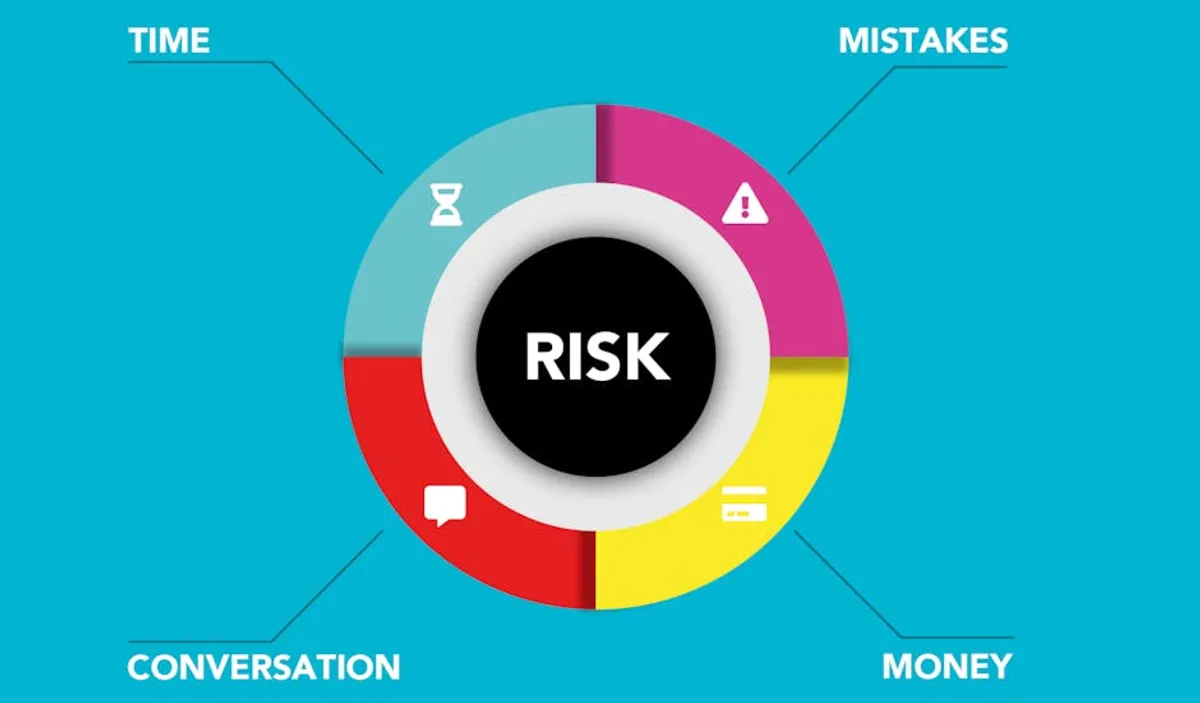
Trading inherently involves risk, a fundamental reality that separates speculation from a sustainable, strategic approach. For any participant, from day traders to long-term investors, understanding how risk management functions is not merely a theoretical exercise; it is the bedrock of capital preservation and consistent profitability. Without a structured framework for identifying, assessing, and mitigating potential losses, even the most promising trading strategies can lead to significant financial setbacks. This article outlines the operational mechanics of risk management within a trading context, detailing the principles, tools, and psychological considerations essential for navigating volatile markets effectively.
Defining and Categorizing Trading Risk
Before managing risk, one must first define it. In trading, risk refers to the potential for financial loss, the uncertainty of future outcomes, and the variability of returns. It’s not a monolithic concept but rather a spectrum of distinct exposures:
- Market Risk: The potential for losses due to broad market movements, such as interest rate changes, economic downturns, or geopolitical events, affecting all assets to some degree.
- Specific Risk (Idiosyncratic Risk): Risk unique to a particular asset or company, arising from factors like management decisions, product failures, or industry-specific regulations. This can often be diversified away.
- Liquidity Risk: The risk that an asset cannot be bought or sold quickly enough at a fair market price due to insufficient trading volume. This becomes critical when needing to exit a position rapidly.
- Credit Risk: The risk that a counterparty (e.g., a broker or borrower) will default on their obligations.
- Operational Risk: The risk of losses resulting from inadequate or failed internal processes, people, and systems, or from external events, such as technical failures or human error.
- Leverage Risk: The amplified potential for both gains and losses when trading with borrowed capital. While leverage can increase returns, it equally magnifies downside exposure.
Effective risk management begins with acknowledging these distinct risk categories and understanding how they apply to specific trading instruments and strategies.
Core Principles of Strategic Risk Mitigation
Successful risk management is rooted in a set of actionable principles designed to control exposure and protect capital. These are not optional additions but integral components of any robust trading plan.
Position Sizing
This is arguably the most critical component. Position sizing dictates how much capital is allocated to a single trade. A common rule among experienced traders is to risk only a small percentage (e.g., 1-2%) of total trading capital on any single trade. For instance, if a trader has $10,000 and adheres to a 1% risk rule, they will not allow any single trade to incur a loss greater than $100. This protects the account from being decimated by a few losing trades, allowing for recovery and continued participation.
Stop-Loss Orders
A stop-loss order is an instruction to automatically close a trade if the price of an asset moves against the trader to a predetermined level. This serves as an immediate, automated defense mechanism, limiting potential losses on a specific position. The placement of a stop-loss is crucial and should be based on technical analysis, volatility, and the trader's risk tolerance, not arbitrary price points. For example, placing a stop-loss just below a significant support level or above a resistance level for short positions.
Risk-Reward Ratio
Before entering any trade, a trader should evaluate the potential profit (reward) against the potential loss (risk). A favorable risk-reward ratio, such as 1:2 or 1:3 (risking $1 to potentially gain $2 or $3), is essential. This means that even if a trader only wins 50% of their trades, they can still be profitable overall because their winning trades generate more capital than their losing trades deplete. This principle guides trade selection, ensuring that only opportunities with sufficient upside potential relative to downside risk are pursued.
Diversification
Spreading investments across various asset classes, industries, or geographical regions reduces concentration risk. If one asset or sector performs poorly, the impact on the overall portfolio is lessened by the performance of others. While diversification doesn't eliminate risk, it smooths out portfolio volatility and protects against specific, unforeseen events affecting a single holding.
Pro Tip: Never risk more than you can afford to lose on any single trade, and ensure your overall portfolio risk aligns with your psychological comfort level. Over-leveraging or ignoring stop-loss orders due to emotional attachment to a trade are common pitfalls that lead to significant capital erosion.
Integrating Risk Management into Trading Strategy
Risk management is not a standalone activity but an integrated component of a comprehensive trading strategy. It influences entry and exit points, trade frequency, and overall portfolio construction.
Developing a Trading Plan
A written trading plan is fundamental. It details the trader's goals, preferred markets, entry and exit criteria, position sizing rules, and specific risk parameters. Adhering to this plan removes emotional decision-making, which is a significant source of trading errors. The plan should be reviewed and adjusted periodically based on market conditions and performance analysis, but not during active trading.
Capital Allocation and Overall Exposure Limits
Beyond individual trade risk, traders must manage their total exposure. This involves setting limits on the maximum percentage of capital exposed to the market at any given time, or to a particular sector or currency pair. For instance, a trader might decide never to have more than 10% of their total capital tied up in open positions across all trades simultaneously. This prevents systemic risk from impacting the entire account.
Volatility Adjustment
Market volatility directly impacts risk. In highly volatile conditions, the potential for price swings is greater, necessitating smaller position sizes or wider stop-loss placements to avoid being stopped out prematurely. Conversely, in low-volatility environments, larger positions might be considered, assuming other risk parameters are met. Tools like the Average True Range (ATR) can help quantify volatility and inform stop-loss placement.
The Psychological Dimension of Risk Management
Even with the most robust technical framework, human psychology often remains the weakest link in risk management. Fear, greed, hope, and overconfidence can override rational decision-making.
- Discipline: The ability to consistently follow a predefined trading plan, especially when facing losses or tempting opportunities that fall outside the plan's parameters.
- Emotional Control: Recognizing and managing the emotional responses to market fluctuations. Avoiding impulsive decisions driven by fear of missing out (FOMO) or the desire to recoup losses quickly (revenge trading).
- Patience: Waiting for high-probability setups that align with the risk-reward criteria, rather than forcing trades.
- Objectivity: Maintaining a detached, analytical perspective on market data and personal performance, free from cognitive biases.
Developing psychological resilience through practice, self-awareness, and consistent adherence to a plan is as crucial as mastering technical analysis or fundamental research.
Building a Resilient Trading Framework
Effective risk management is not about avoiding losses entirely, which is an unrealistic goal in trading. Instead, it’s about controlling the magnitude and frequency of those losses, ensuring that capital is preserved to capitalize on future opportunities. By systematically applying principles of position sizing, stop-loss orders, diversification, and a favorable risk-reward ratio, traders can build a resilient framework that withstands market volatility and supports long-term growth. This proactive approach, coupled with disciplined execution and psychological awareness, transforms trading from a speculative gamble into a managed endeavor.
Frequently Asked Questions
What is the most important aspect of risk management in trading?
Position sizing is often considered the most critical aspect, as it directly controls the amount of capital exposed to loss on any single trade, thereby preventing catastrophic account drawdowns.
How does a stop-loss order protect a trader?
A stop-loss order automatically closes a trade when the price reaches a predetermined level, limiting potential losses by preventing further adverse price movements from eroding more capital.
Can risk management guarantee profits?
No, risk management does not guarantee profits. Its primary purpose is to preserve capital, minimize losses, and ensure a trader can remain in the market to take advantage of future opportunities. Profitability depends on a combination of effective risk management and a sound trading strategy.
How often should a trading plan and risk management strategy be reviewed?
A trading plan and risk management strategy should be reviewed periodically, typically monthly or quarterly, and after significant market events or changes in personal financial circumstances. This ensures they remain aligned with current market conditions and individual goals.